Post-Turing Computational Frontier

Architecting the Convergence of Organoid, Neuromorphic, Molecular & Quantum Computing

Neuroqudit Research & Development breaks through classical thermodynamic and von Neumann computational ceilings. By harmonizing living biological wetware, neuromorphic memristive silicon, macromolecular logic, and high-dimensional quantum qudits, we pioneer solutions for humanity’s most intricate, computationally intractable challenges.

d ≥ 8
Qudit State Levels
106+
Organoid Synaptic Nodes
< 1 fJ
Neuromorphic Energy/Spike
1018
Molecular Bits / mm³
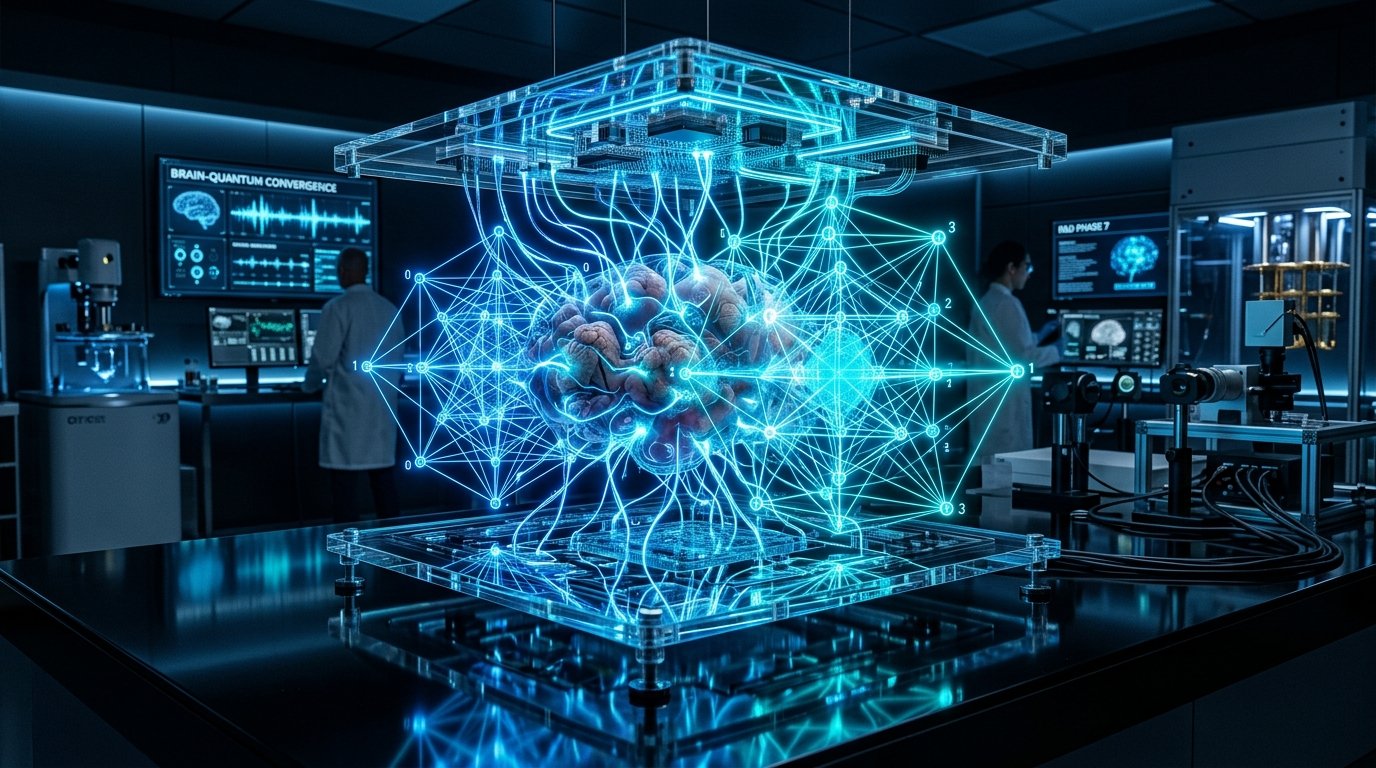
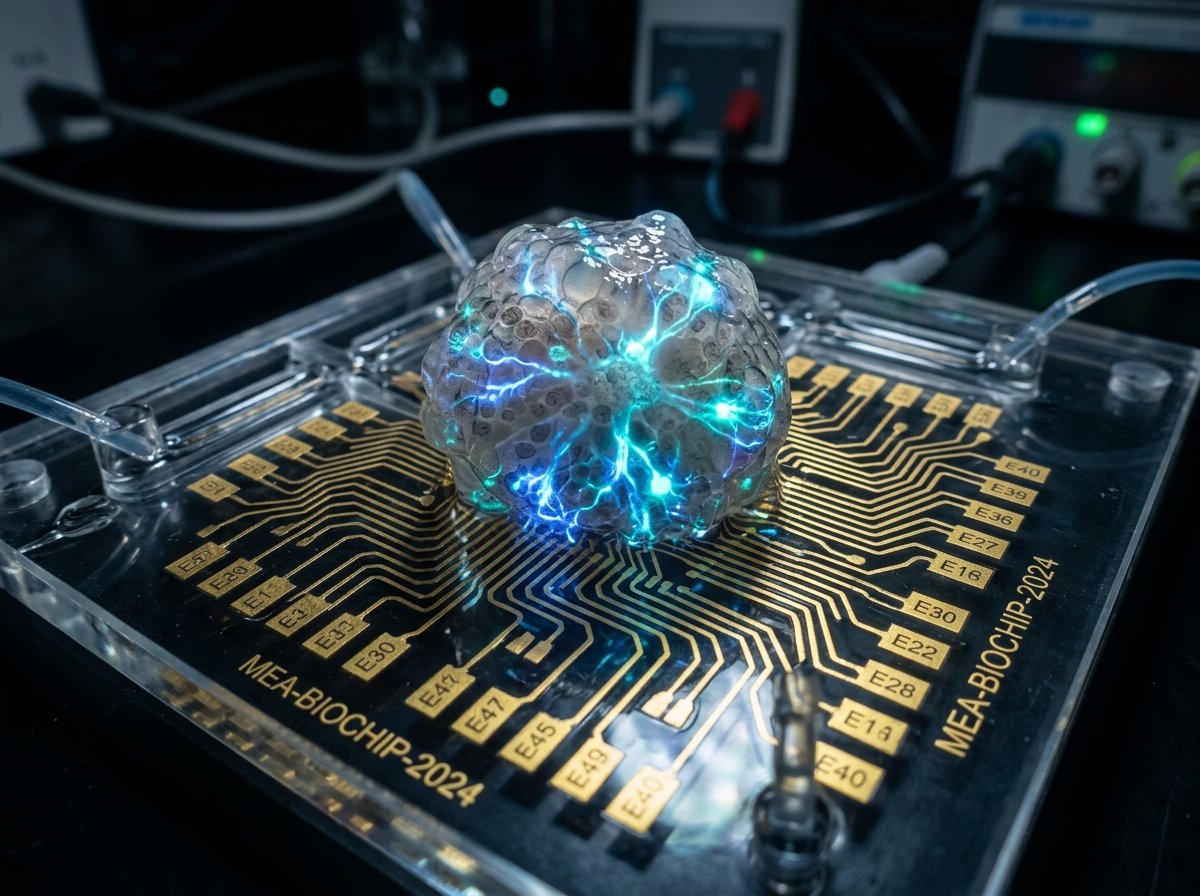
Convergence of Organoid Wetware and Quantum Qudits in Neuroqudit Research Laboratory
Quantum-Wetware Integrated Mesh
Real-time In-Vitro & Qudit Co-Simulation
STATE: COHERENT
FOUNDATIONAL MISSION

Transcending the Limits of Silicon and Binary Determinism

The exponential growth of complex systems—from non-linear climate dynamics and molecular folding to NP-hard combinatorial optimization—has outpaced the physical constraints of conventional binary architectures. Moore's Law has encountered thermodynamic quantum tunneling limits, and the von Neumann memory wall stifles scalable intelligence.

Neuroqudit Research & Development was established to engineer the multi-substrate computing paradigm. We do not view biological wetware, neuromorphic circuits, molecular genetics, and quantum mechanics as isolated silos; rather, we synthesize them into a unified computational fabric where each substrate computes at its natural physical optimum.

⚡

Thermodynamic Efficiency

Leveraging biological wetware consuming orders of magnitude less energy than exascale silicon.

🌀

High-Dimensional Qudits

Scaling d-dimensional state spaces (d > 2) for exponential Hilbert capacity and noise resilience.

Neuroqudit Emblem
01. Organoid Computing Biological Wetware
02. Organoid Intelligence (OI) Closed-Loop Biocontrol
03. Neuromorphic Hardware Memristive SNNs
04. Molecular Computing Macromolecular Logic
05. Quantum Qudit Systems d-Level Superposition
SCIENTIFIC PILLARS

The Five Frontier Paradigms of Neuroqudit

Explore the core research domains where Neuroqudit develops proprietary algorithms, bio-hybrid interfaces, and physical hardware prototypes to unlock unprecedented computational velocity.

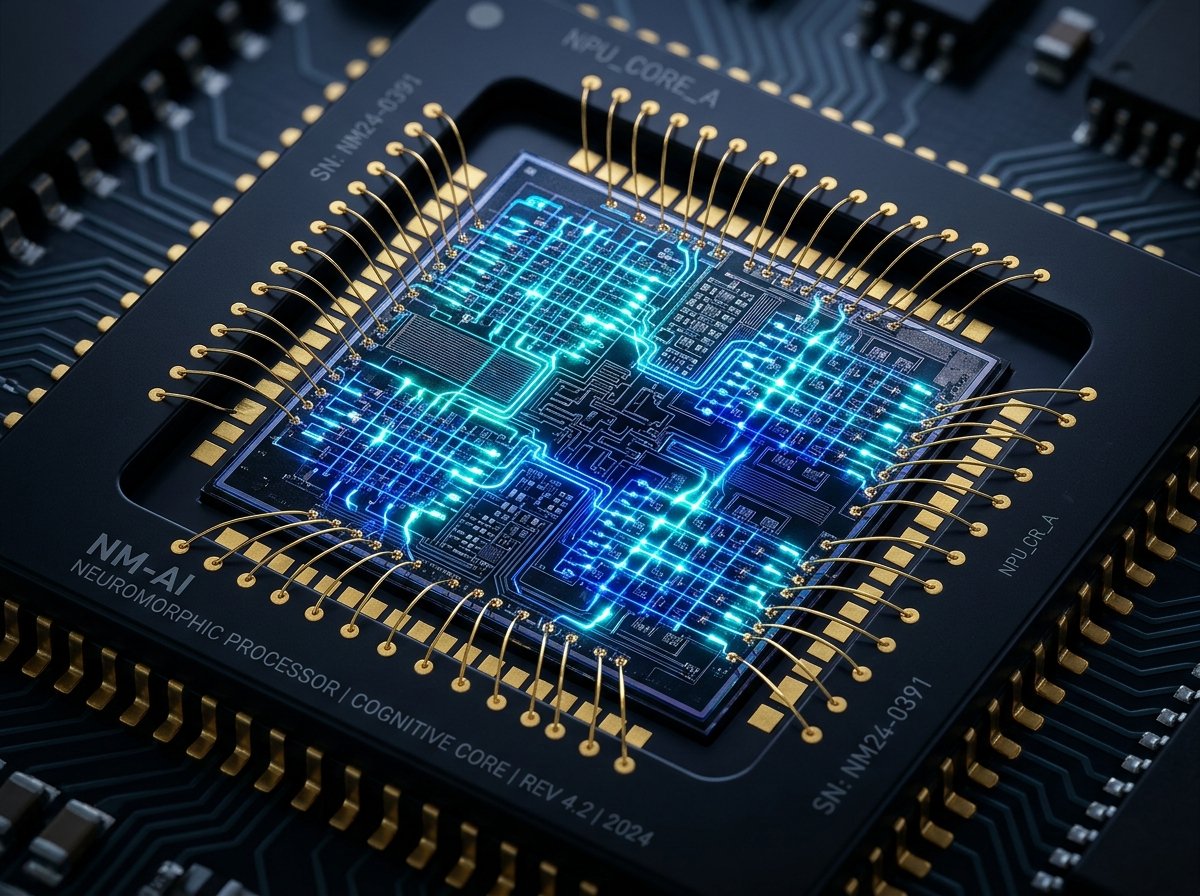
Neuromorphic Processor Silicon with Memristor Crossbars
Non-Von Neumann Silicon
Paradigm III

Neuromorphic Computing

Brain-inspired physical computing utilizing memristive crossbar arrays and asynchronous Spiking Neural Networks (SNNs). Our neuromorphic systems execute in-memory compute, colocalizing storage and processing to eliminate the von Neumann data bottleneck with sub-femtojoule energy per synaptic spike.

Core Architecture Resistive RAM Memristors
Execution Model Event-Driven Spike Timing
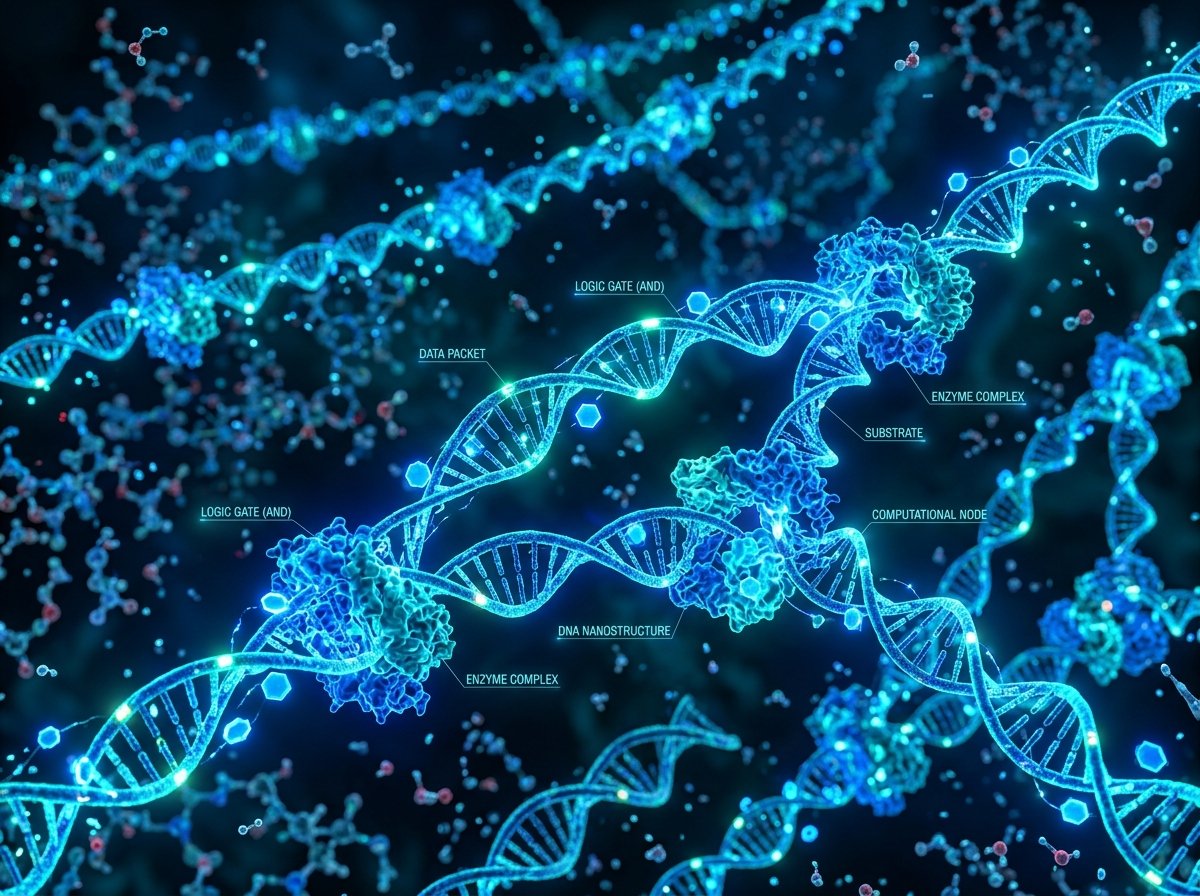
DNA and Molecular Computing Logic Gates
Macromolecular Parallelism
Paradigm IV

Molecular Computing

Harnessing programmable DNA strand displacement, enzymatic cascade logic gates, and chemical reaction networks (CRNs). Molecular computing delivers astronomical information density—storing an exabyte per cubic millimeter—alongside massive combinatorial parallelism that solves graph theory and biochemical folding inherently in solution.

Storage Density 1 Exabyte / mm³
Logic Mechanism Toehold Strand Displacement
TECHNICAL BLUEPRINT

The Unified Neuroqudit Architecture Matrix

Interact with our five computational layers to evaluate technical specifications, operational substrates, computational mechanics, and convergence vectors.

Living Cortical Wetware Computation

Organoid computing utilizes living cerebral tissue grown from reprogrammed stem cells. These cellular structures form active three-dimensional dendritic networks, synaptic junctions, and oscillatory field potentials, demonstrating biological general intelligence primitives that no static silicon processor can replicate.

  • ✦
    Unsupervised Hebbian Self-Organization: Neuronal wetware continuously optimizes its internal connectivity without external gradient descent.
  • ✦
    Microfluidic Environmental Control: Automated bioreactor perfusion delivering steady nutrient, oxygen, and neurotrophic modulation.
  • ✦
    High-Density Electrophysiology: Real-time stimulation and recording across tens of thousands of simultaneous micro-channels.
Physical Medium: iPSC Cortical Organoids
Information Carrier: Action Potentials (Spikes)
Plasticity Window: STDP < 20 ms
Parallel Synaptic States: 1011 per cm³
Adaptive Synaptic Plasticity Index:

Closed-Loop Sensory-Motor Biocomputational Control

Organoid Intelligence (OI) represents the operational translation of biological wetware into deterministic and stochastic algorithmic feedback loops. Neuroqudit builds neuro-electronic transducers that translate digital vector spaces into spatio-temporal electrical pulse trains, training wetware to perform cognitive decision-making tasks.

  • ✦
    Reinforcement Feedback: Applying electrophysiological dopamine-analog stimulation to steer axonal pathfinding.
  • ✦
    Dynamic State Estimation: Decoding non-linear biological population spikes into real-time control directives.
Loop Latency: < 1.2 milliseconds
Stimulation Channels: 1,024 Coordinated Sites
Continuous Lifelong Learning: Zero Catastrophic Forgetting
Closed-Loop Convergence Stability:

Event-Driven Memristor In-Memory Processing

Unlike power-hungry GPUs constrained by clock cycles and constant memory shuttle, our neuromorphic architectures only process information when changes occur. Utilizing analog memristive crossbars, weights are stored directly in device conductance states.

  • ✦
    Sparsity by Design: Over 95% spatial and temporal sparsity, reducing operational energy to fractions of a microwatt.
  • ✦
    Hybrid Biological Bridge: Serves as the impedance-matched intermediary between wetware electrodes and digital bus lines.
Switching Energy: 0.45 fJ per synaptic event
Crossbar Density: 40 Million Synapses/cm²
Clock Architecture: Pure Asynchronous Event Mesh
Silicon Energy Efficiency vs Von Neumann:

Macromolecular Data Storage & Enzyme Computing

Molecular computing executes algorithmic procedures using biochemistry as the computational medium. DNA strand displacement (DSD) cascades execute boolean and fuzzy logic without electrical power, enabling mass-parallel combinatorial search inside fluidic micro-volumes.

  • ✦
    Ultra-High Density Cold Storage: Preserves petabytes of corporate and scientific datasets in millimeters for millennia.
  • ✦
    Chemical Algorithmic Solvers: Tests billions of concurrent permutations for molecular affinity and graph paths simultaneously.
Information Density: 215 Petabytes / gram DNA
Operational Temperature: Ambient Bio-Fluidic (20-37°C)
Parallelism Scale: 1015 Simultaneous Reactions
Combinatorial Capacity Index:

Multidimensional Qudit Computing (d ≥ 3)

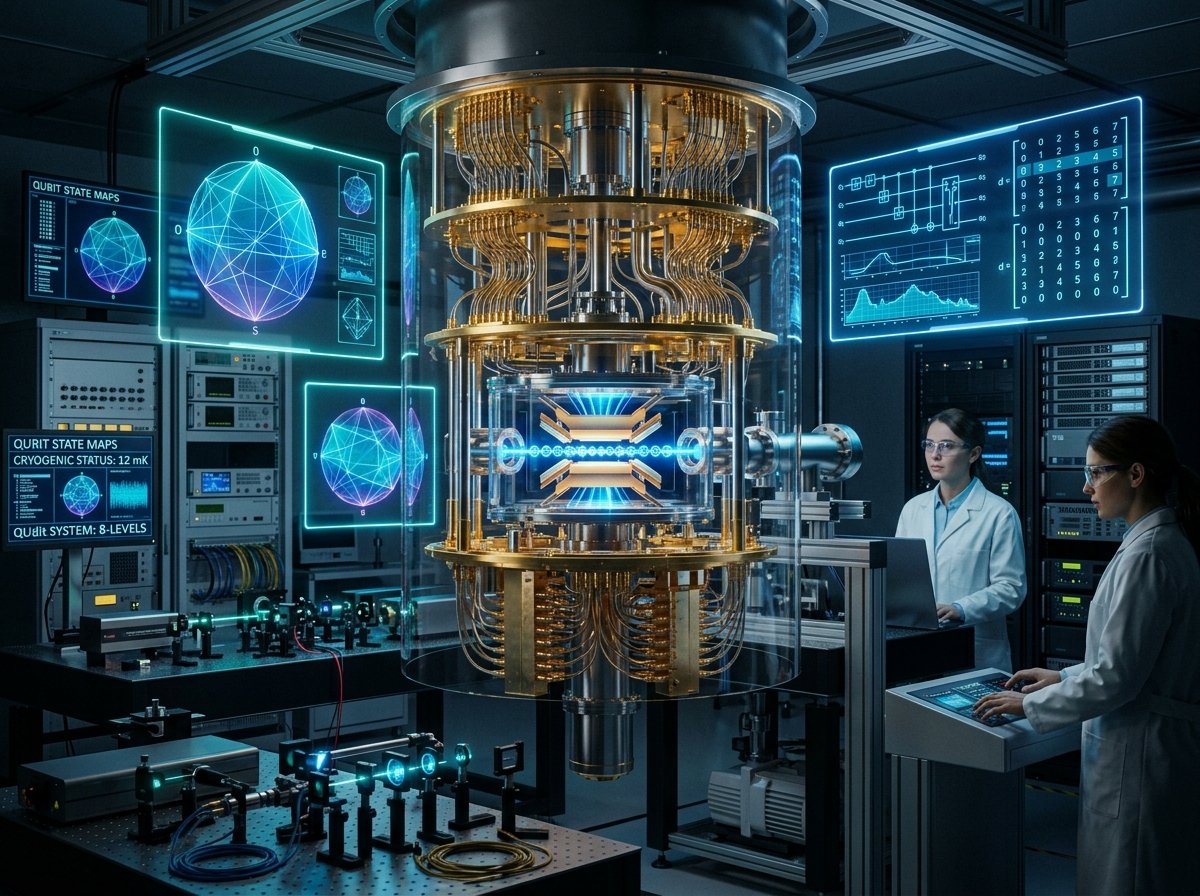
The universe is not binary. Standard quantum computing is bottlenecked by the 2-level qubit constraint. Neuroqudit’s namesake paradigm expands quantum states into d-level systems. A system of n qudits of dimension d operates in a Hilbert space of dimension dn, yielding massive compression of entangling operations.

  • ✦
    Simplified Gate Compilation: Replaces deep cascades of 2-qubit CNOT gates with native multi-level transitions.
  • ✦
    Magic State Distillation & Error Correction: Higher threshold tolerances against environmental decoherence.
  • ✦
    Native High-Spin Quantum Chemistry: Exact mapping of complex molecular d- and f-electron orbitals.
Quantum Dimension: d = 3 (qutrit), 5, 8 (qudit)
Hilbert Space Growth: O(dn) vs O(2n)
Coherence Lifetime: T₂* > 120 ms (Trapped Ion Array)
Circuit Depth Compression Efficiency:
ENTERPRISE & SCIENTIFIC IMPACT

Solving Intractable Real-World Complexities

Where classical supercomputers take centuries or exhaust grid power, Neuroqudit's hybrid paradigms deliver transformative breakthroughs.

🧬

De Novo Therapeutics & Molecular Simulation

Simulating complex multi-protein allosteric interactions and drug-target affinities requires quantum mechanics and macromolecular kinetics. We pair quantum qudit orbital solvers with molecular DNA reaction validation to discover treatments for previously untreatable genetic pathology.

Protein Kinetics Qudit Orbitals Target Affinity
🌐

Planetary Scale Systems & Climate Dynamics

Multiscale non-linear fluid dynamics, chaotic atmospheric turbulence, and carbon sink models present extreme dimensionality. Neuromorphic sparse tracking coupled with organoid pattern recognition calculates tipping points at negligible operational energy costs.

Non-Linear Chaos Sub-Picojoule SNNs Atmospheric Models
🔒

Post-Quantum Resilience & NP-Hard Combinatorics

Global supply chain routing, hyper-dimensional financial arbitrage risk modeling, and cryptographic lattice verification. Qudit multidimensional superposition navigates NP-hard state graphs exponentially faster than binary quantum algorithms.

Combinatorial Graphs Lattice Verification Portfolio Optimization
🤖

Autonomous Edge Cognition & Neuro-Robotics

Deep-space probes, autonomous submersibles, and extreme-environment robots cannot depend on cloud data centers. Neuromorphic-wetware hybrid edge cores deliver continuous, adaptive learning and sensor fusion within tight energy and thermal budgets.

Lifelong Learning Radiation-Tolerant Edge Robotics
🧠

Brain-Computer-Quantum Synthesis

Next-generation neural prosthetics and bi-directional brain interfaces require millisecond-level decoding of biological intent. Our neuromorphic-organoid processors translate high-density neural spikes into coherent machine commands in real time.

HD-MEA Decoding Bio-Impedance Sync Neuroprosthetics
💾

Exabyte Macromolecular Archive

Preserving the totality of institutional knowledge and genomic archives without recurring magnetic media degradation. Our DNA-based synthesis and enzymatic recall systems maintain zero-loss bit preservation for centuries.

Millennial Retention Error-Correcting DNA Zero Power Storage
RESPONSIBLE INNOVATION

Scientific Governance & Ethical Bio-Frameworks

Pushing the boundaries of living wetware and high-dimensional quantum computation demands transparent protocols, rigorous peer validation, and proactive ethical guardianship.

Bioethics Framework

In-Vitro Wetware Governance

All cerebral organoid research complies with international bioethical standards. We ensure strict protocols regarding tissue origin, non-sentience electrophysiology monitoring, and responsible biocomputing benchmarks.

Mathematical Verification

Formal Qudit Benchmarking

Our multi-level quantum circuits are subjected to rigorous randomized benchmarking, quantum process tomography, and open-source mathematical verification to ensure verifiable quantum computational advantage.

Collaborative Rigor

Academic & Industrial Consortia

We partner with global universities, national supercomputing centers, and leading research foundations to publish peer-reviewed findings and advance the open science ecosystem.

ENGAGE OUR R&D TEAMS

Initiate Strategic Collaboration

Whether you represent a research university, a deep-tech enterprise, or a government laboratory, Neuroqudit Research & Development is ready to explore joint projects, computational co-processing pilots, and technology licensing.

✉
Corporate Contact Email luciano.silva@neuroqudit.io
in
Official LinkedIn Organization linkedin.com/company/neuroqudit
↗
📍
Research & Development Operations Global Hybrid Labs & Computational Centers
RESPONSE PROTOCOL: Strategic inquiries receive review by the R&D advisory within 24-48 business hours.

Submit Collaborative Inquiry

Provide initial details about your computational challenge or research scope.

✓ Copied to clipboard